Short illustrated stories about how extraordinary projects work, who makes them possible, and what a single image can’t tell you.
First editorial studies · 2 November 2026
RETURN. / Generated editorial artwork
The part that comes home.
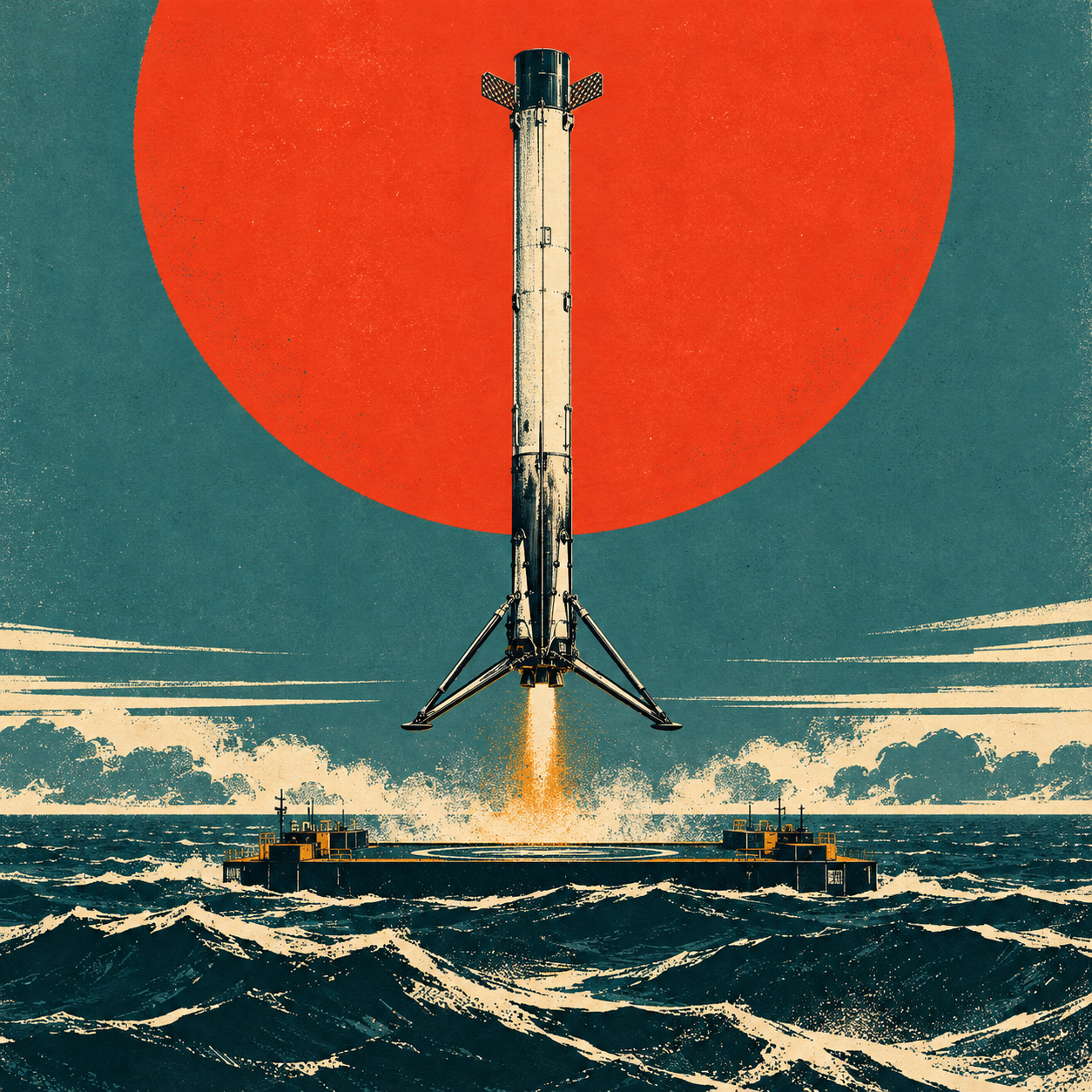
There’s a reason a rocket returning to an ocean platform holds your attention. A launch usually asks us to look up. This moment asks us to look back down, at a machine trying to finish its work in one piece.
The detail worth keeping is “first stage.” Falcon 9 does not land as a complete launch vehicle. The booster separates, while the upper stage continues the mission. The recovered part is the first-stage booster. NASA’s historical record describes the first successful floating-platform landing on 8 April 2016.
That distinction is the beginning of a better story. Recovery makes reuse possible, but the image alone cannot tell you which mission you are looking at, how many times a booster has flown, or what happens between flights. Those questions belong alongside the sense of wonder.
Our illustration interprets the feat. Its dawn light, sea and vehicle details are not a documentary record of that first landing.
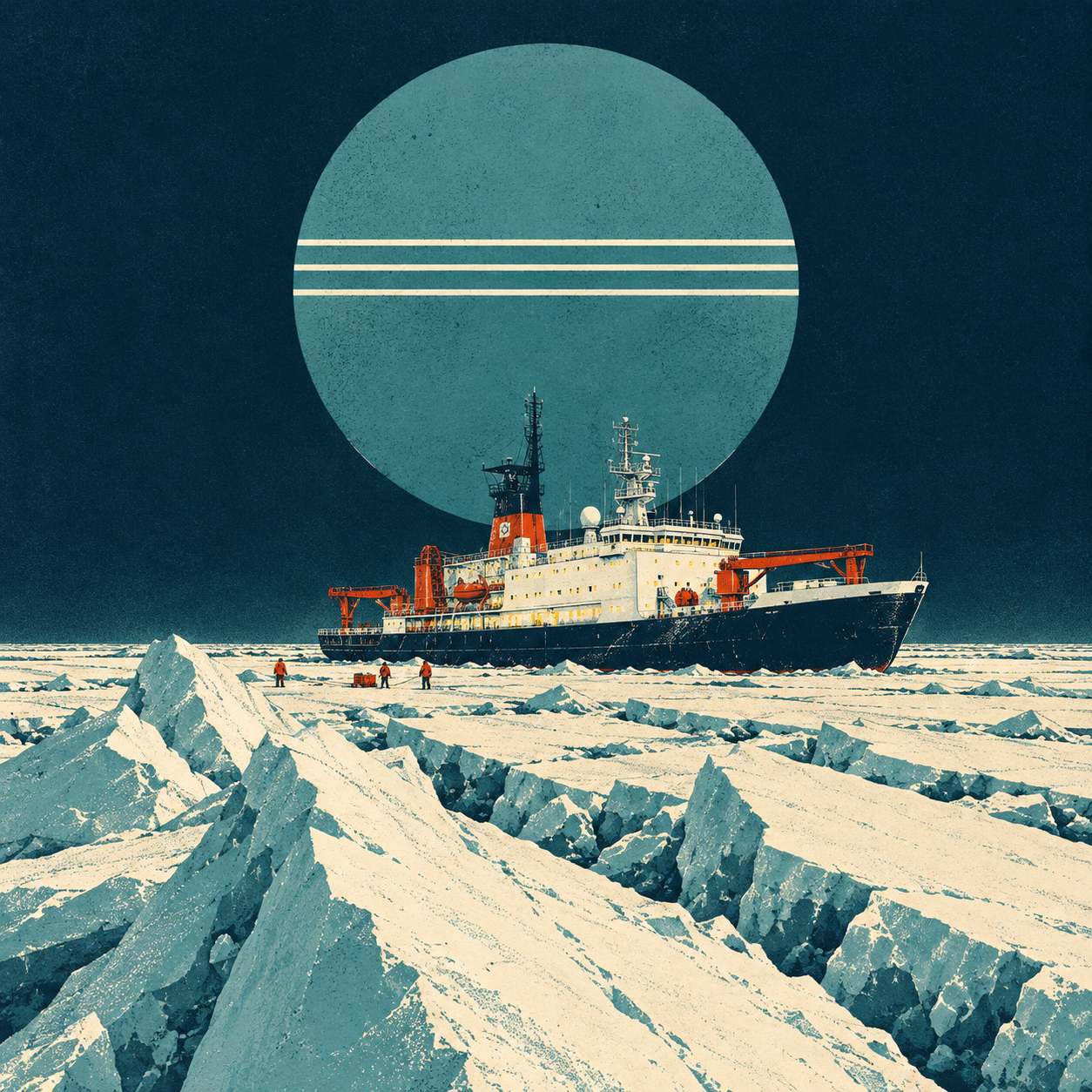
Most ships are built to get somewhere. For the MOSAiC expedition, Polarstern’s extraordinary role was to stay with the ice.
The ship left Tromsø in September 2019 and became the centre of a drifting Arctic observatory. Wind, currents and sea ice helped determine its course. Through the polar year, researchers studied relationships between atmosphere, ice, ocean and life.
There is a human story in that method: the patience of returning to observations while the environment keeps changing. The completed expedition ran through 2019 and 2020. It is a historical project, rather than an invitation to a voyage happening now.
Our print imagines an island of light in the long night. The camp arrangement and sky are interpretive. The expedition’s actual observations are the work behind the atmosphere.
Sources and further reading: MOSAiC project reference, including AWI’s account of the expedition.
SPAN. / Generated editorial artwork
What does 343 metres mean?
A big number can flatten a complicated thing. Millau Viaduct is often introduced through its height, but height needs a reference point.
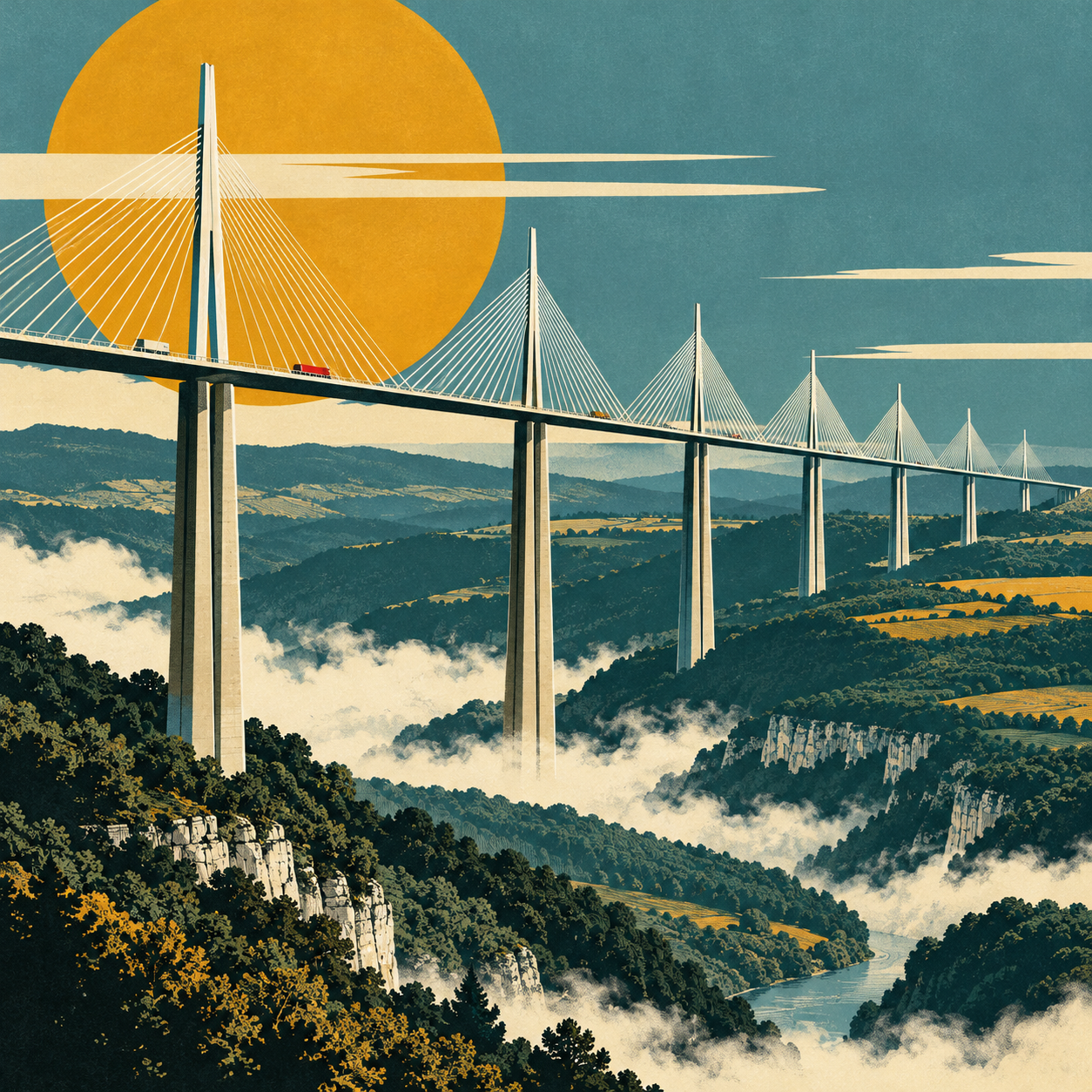
The 343-metre figure is the bridge’s maximum structural height. It is not the distance from the road deck to the river. Eiffage describes a 2,460-metre crossing with seven concrete piers and a steel deck, inaugurated in December 2004.
Those facts help you read the image: a long horizontal line carried across a deep landscape. The illustration adds golden mist and a chosen viewpoint. The reference sheet supplies the dimensions; the artwork supplies a way of feeling their scale.
That is the relationship we want between a print and a Field Note. Let the picture draw you in. Let the story make you look again.